The Complete Guide to Indian Ethnic Wear Fabrics: Silk, Cotton, Chiffon & More
Choosing the right fabric is the foundation of any great ethnic wear outfit. This guide breaks down the most popular fabrics used in Indian women's clothing so you can shop smarter.
Why Fabric Choice Matters
In Indian fashion, fabric is everything. The same kurta design can look entirely different in cotton versus silk — one breezy and casual, the other opulent and formal. Understanding the properties of different fabrics helps you make smarter choices: what to wear in summer versus winter, for daily use versus celebrations, and for different body types.
Here is a comprehensive guide to the most popular fabrics used in Indian women's ethnic wear.
Cotton: The Everyday Champion
Cotton is India's most beloved fabric for a reason — it is breathable, durable, and supremely comfortable in the subcontinent's warm climate. Pure cotton kurtas and salwar sets are perfect for daily wear, especially in summers.
**Best for:** Casual wear, office wear, everyday salwar kameez, kurtas
**Season:** Spring and Summer
**Care tip:** Machine wash on gentle cycle, iron while slightly damp
Regional variations include Khadi (hand-spun), Mangalgiri cotton (Andhra Pradesh), and Sambalpuri cotton (Odisha) — each with a unique texture and character.
Silk: The Celebration Fabric
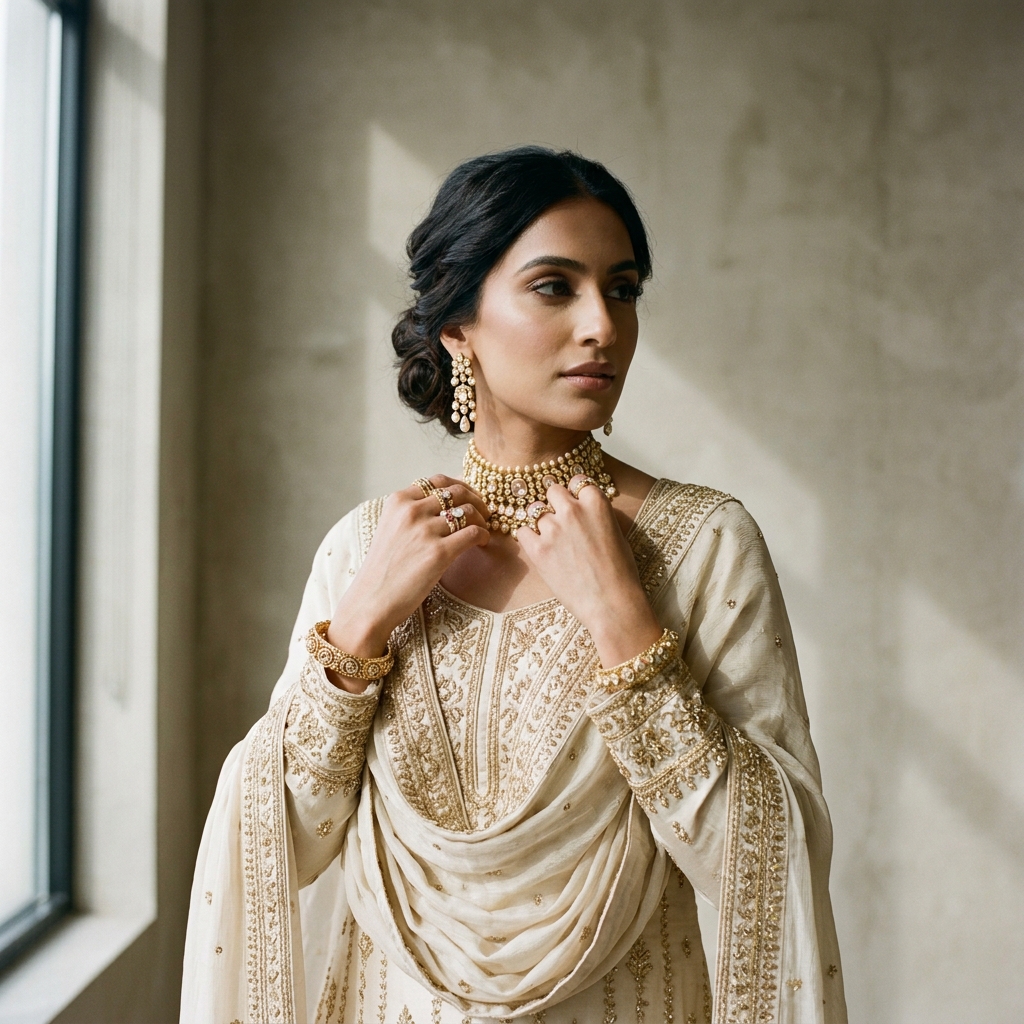
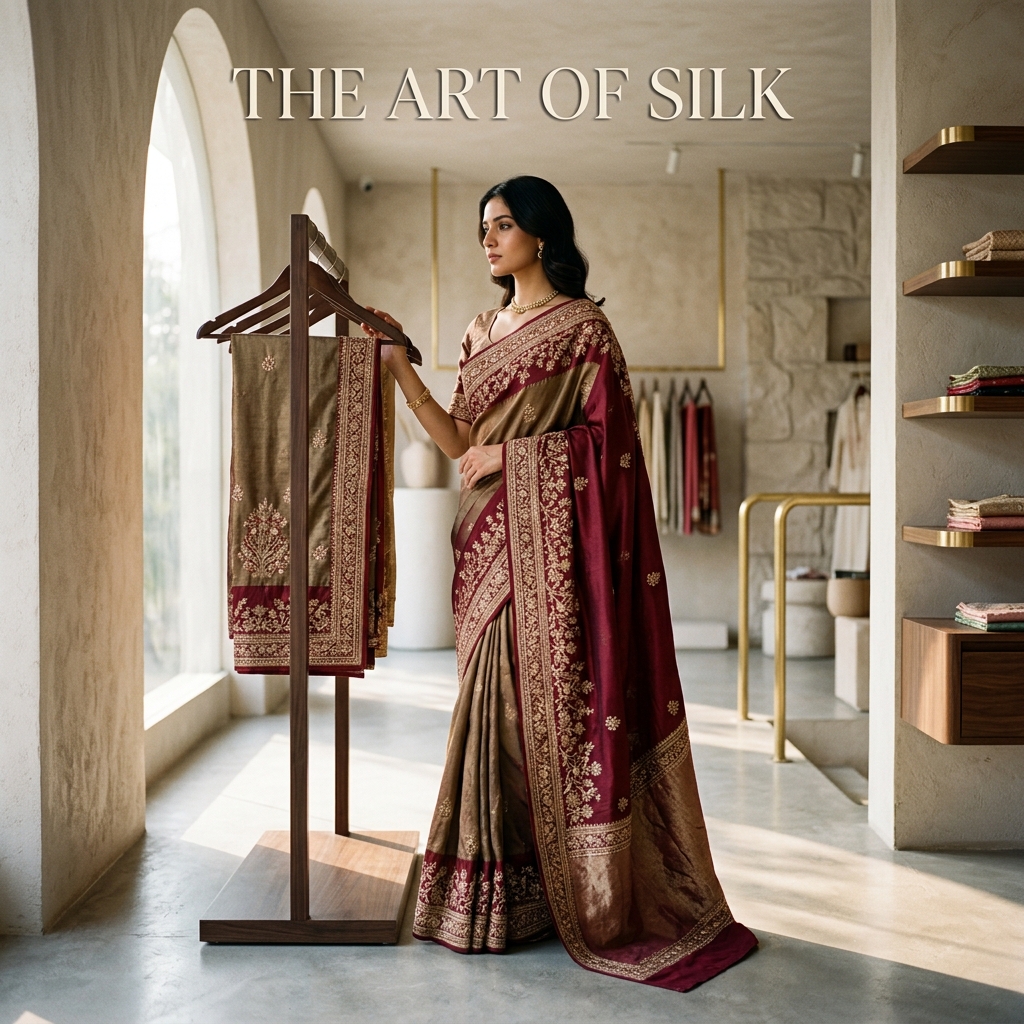
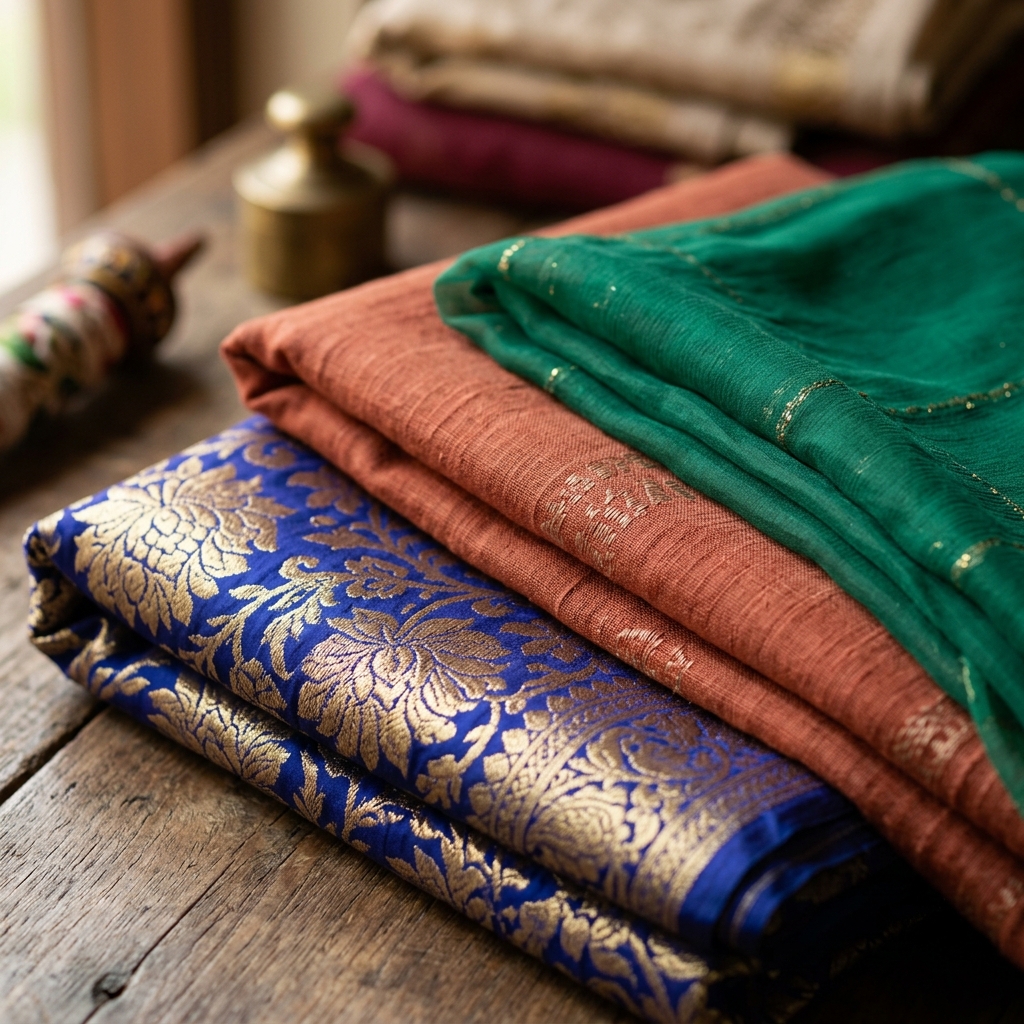
Silk is synonymous with celebration in India. From Banarasi brocade to Kanjivaram, Mysore silk to Tussar, each silk variety carries the legacy of its region's weavers. Silk garments drape beautifully, catch light magnificently, and signal festivity.
**Best for:** Weddings, festivals, formal events, sarees, Anarkali suits
**Season:** Year-round (lighter silks in summer, heavier in winter)
**Care tip:** Dry clean or hand wash in cold water only. Never wring.
Pure silk is an investment — it only gets more beautiful with age when cared for properly.
Chiffon & Georgette: The Flow Masters
Chiffon and georgette are lightweight, sheer fabrics that drape in gorgeous flowing waves. They are most commonly used for dupattas, overlays, and evening salwar sets. The way these fabrics move when you walk or dance makes them particularly popular for celebrations.
**Best for:** Dupattas, festive salwar sets, party wear
**Season:** Spring, Summer, and indoor events
**Care tip:** Hand wash gently or dry clean. Handle with care to avoid snags.
Chanderi & Maheshwari: The Artisan Silks
Chanderi (from Madhya Pradesh) and Maheshwari (also from MP) are lightweight silk-cotton blends with a distinctive translucent quality and subtle sheen. They are incredibly versatile — dressier than cotton but lighter than pure silk, making them ideal for the office-to-dinner transition.
Both fabrics often feature traditional woven borders and patterns that are completely unique to each weaver — making every piece genuinely one-of-a-kind.
Linen: The Modern Minimalist Choice
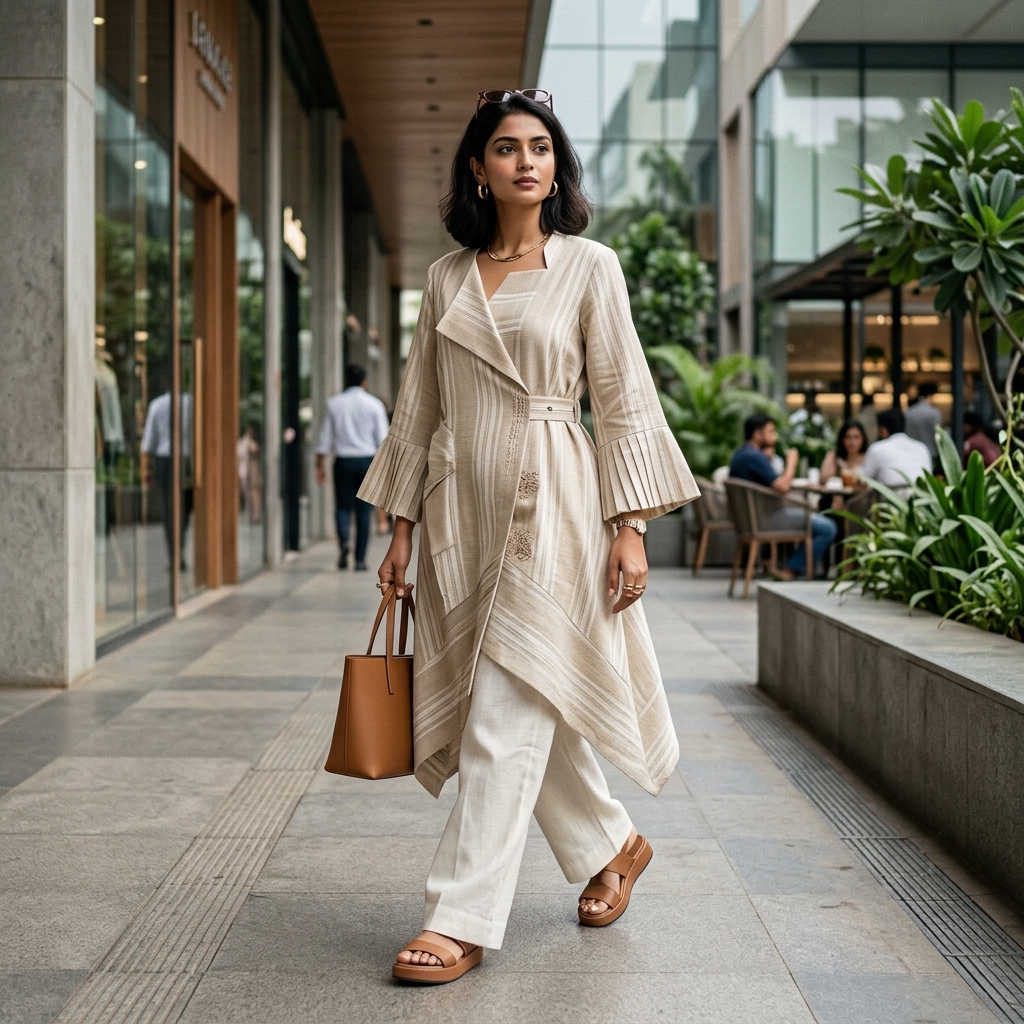
Linen has become increasingly popular in Indian ethnic wear over the past few years. It has a beautifully textured, slightly rough quality that photographs incredibly well and looks effortlessly chic. Linen kurtas in earthy neutrals — ecru, sand, slate, and sage — are a staple of the modern Indian woman's wardrobe.
**Best for:** Contemporary kurtas, casual ethnic wear, fusion outfits
**Season:** Summer and Spring
**Care tip:** Machine wash on gentle cycle. Expect natural creasing — it's part of the charm.